


1. Context
The company in question follows a traditional waterfall approach to project management, where each phase is completed before moving on to the next. This methodology often lacks flexibility and can be less conducive to incorporating user research throughout the development lifecycle.
2. Some of the challenges I´ve faced
2.1 Limited Awareness and Understanding: The concept of user research and its value may be unfamiliar or undervalued within the company. As the researcher, it´s my responsibility to educate stakeholders about the benefits of user-centered design and how research can inform decision-making.
2.2 Resistance to Change: Waterfall-driven companies may have entrenched practices and hierarchies that resist changes in methodologies. Convincing stakeholders of the need for a research-driven approach and overcoming resistance to change can be a significant challenge.
2.3 Timing and Budget Constraints: Waterfall methodologies often have fixed timelines and budgets allocated for each phase. Integrating research within these constraints can be challenging, as it may require adjustments to project plans and resource allocations.
2.4 Siloed Team Structure: In a waterfall-driven organization, teams are often siloed, with limited collaboration and communication across departments. Breaking down these silos and promoting cross-functional collaboration is crucial for integrating research effectively.
3. Strategies to overcome challenges
3.1 Building Awareness and Educating Stakeholders: I´ve had the idea of conducting workshops, presentations, and one-on-one sessions to create awareness about the value and impact of user research. Sharing success stories and case studies from other organizations can help illustrate the benefits of a research-driven approach. But time within the teams is a scarce thing and not everybody is open to the learning process.
3.2 Aligning Research Goals with Business Objectives: Demonstrating how user research can contribute to achieving business goals is essential for gaining stakeholder buy-in. I´ve attempted to connect research findings to specific business outcomes and demonstrate how research insights can mitigate risks and enhance product success. However, although some colleagues understood how important and impactful the research is when looking for a successful outcome, most stakeholders already had a process in mind that ``just works and weren´t too willing to try the process as the methodology suggests.
3.3 Incremental Integration of Research: Given the constraints of the waterfall methodology, I identified key touchpoints where research can be integrated. This could include conducting early-stage exploratory research to inform requirements gathering or usability testing during the development phase.
3.4 Collaboration and Communication: Facilitating collaboration and open communication among teams is crucial. I´ve organized cross-functional workshops (with very high no-show numbers) established regular touchpoints for sharing research insights, and encouraged knowledge-sharing across the squads.
4. Advocating
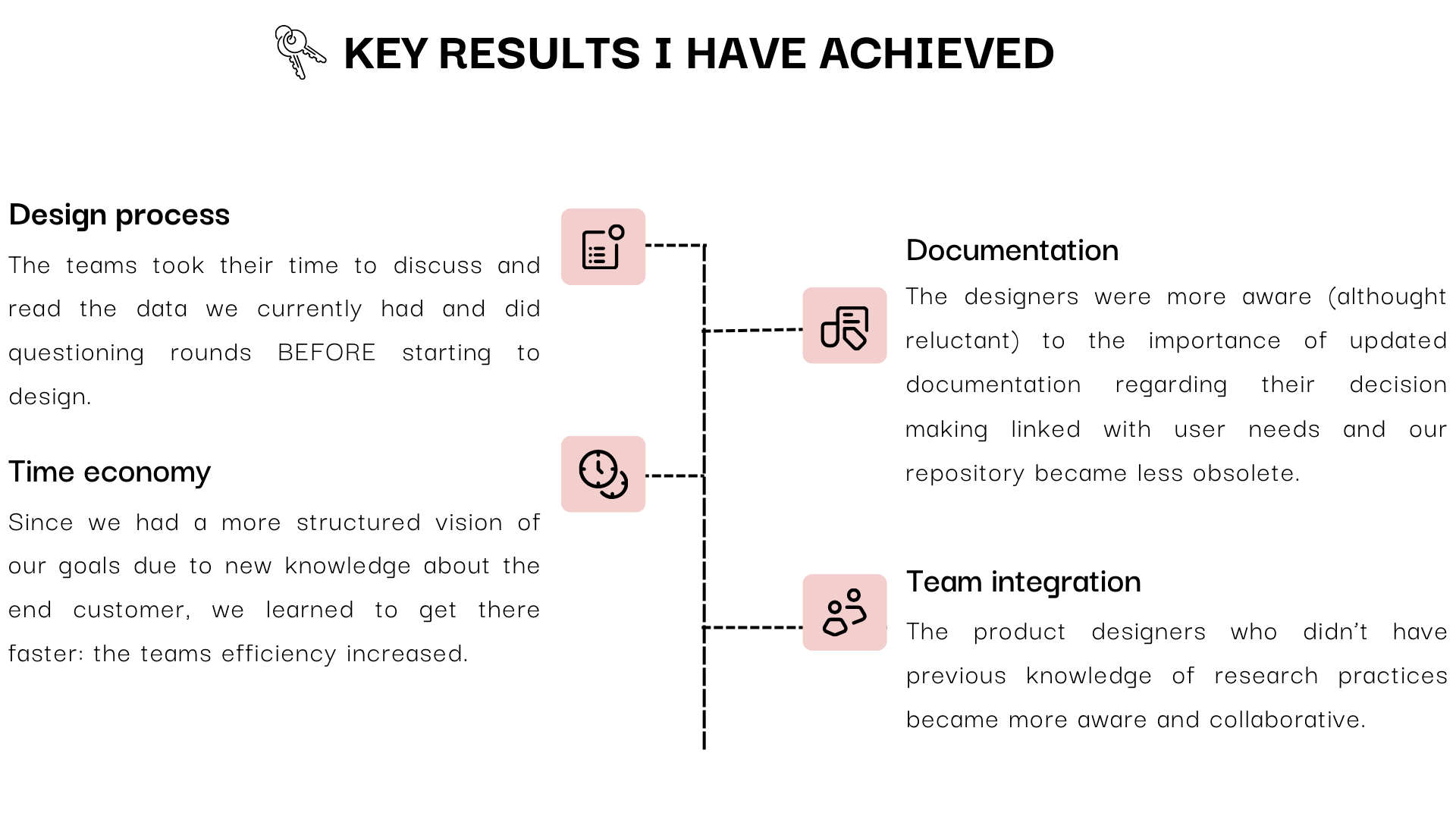
To further promote the research culture, I´ve measured and demonstrated the impact of research on project outcomes. This was achieved through tracking key performance indicators (KPIs), gathering qualitative feedback from stakeholders, and advocating for the value of research-driven decision-making.
5. Conclusion
Integrating a research culture in a waterfall-driven company without agile methodologies presents unique challenges. Overcoming limited awareness, resistance to change, timing and budget constraints, and siloed team structures require a strategic approach. By building awareness, aligning research goals with business objectives, incrementally integrating research, fostering collaboration, and measuring impact, I am gradually transforming the company's approach to be more user-centered and reap the benefits of research-driven decision-making.